Call or Text Us today (720) 552-0752
Gutters are the least glamorous part of any house and the most consequential when they fail. A properly sized, correctly pitched gutter system moves thousands of gallons of water away from your foundation every year. A poorly installed one delivers that same water directly to your basement wall, your siding, your fascia boards, and the soil right next to your foundation footings. Quietly, season after season, until something cracks, rots, or floods into water damage that costs far more to repair than the gutter system would have cost to install correctly in the first place.
At ORUS Painting Solutions, our gutter installation services are treated as a water management problem first and an exterior finish problem second. Anyone can hang an aluminum trough off a fascia board. Getting water from your roof to a place that won’t damage your home takes more thought than that, and we approach every gutter service call accordingly.
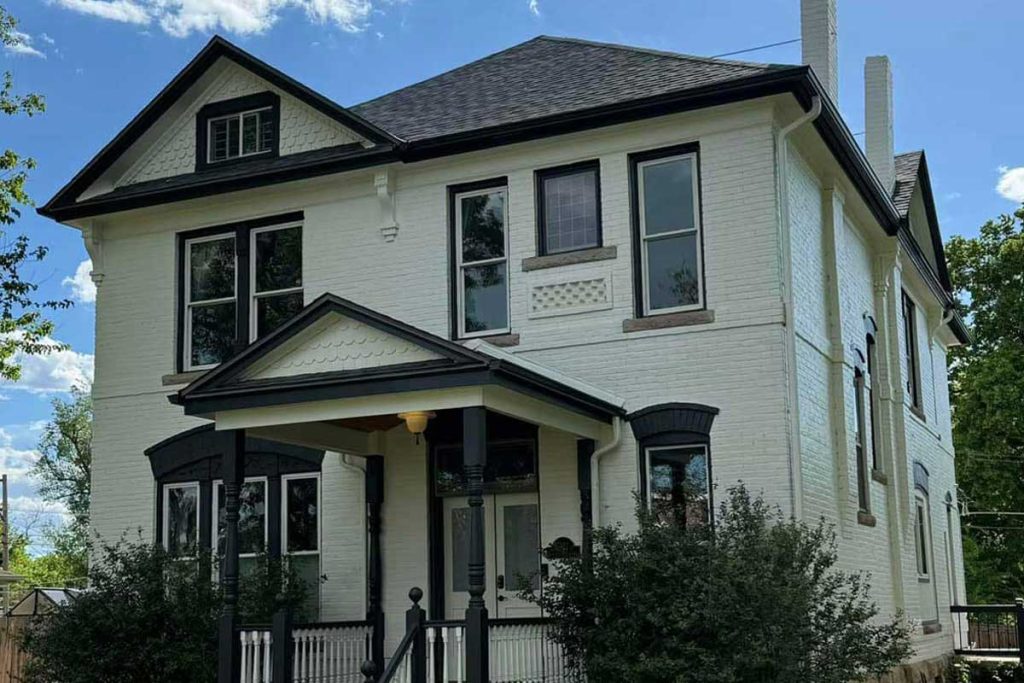
The number of homes we visit with gutters installed at the wrong pitch, draining toward the foundation rather than away, or undersized for the roof area feeding them, is sobering. Most of these installations look fine from the curb. The problems show up later, usually as basement moisture, settled landscaping, or fascia rot that the homeowner attributes to roof age rather than the actual cause.
Doing this right means thinking about each of the following before the first piece of gutter goes up:
Roof area and rainfall load. A 5-inch K-style gutter handles roughly 5,500 square feet of roof in typical rainfall. A 6-inch handles considerably more, and matters on homes with steep pitches or large drainage planes where water sheets off fast. We calculate the actual load for each section of your roof before specifying gutter size.
Pitch. Gutters need to slope toward downspouts at roughly 1/4 inch per 10 feet. This is not visible to the eye, but it’s enough that water actually moves. Flat gutters hold standing water, breed mosquitoes, freeze in winter, and accelerate corrosion. Over-pitched gutters look obviously crooked. Both are common mistakes.
Downspout count and placement. One downspout per 30–40 feet of gutter is a reasonable starting point, more on heavily loaded sections. Inside corners typically need their own downspout. Where downspouts terminate matters as much as where they start — dumping water against the foundation defeats the entire purpose of the system.
Hanger spacing. Gutter hangers carry weight: water, snow, ice, leaves, and occasionally a fallen branch. Spacing them 24 inches on center is the standard; 36 inches is what we see on sagging installations. We use heavier-gauge hidden hangers screwed into framing, not nailed into trim.
Fascia and soffit condition. Before we hang anything, we inspect the wood we’re hanging it from. Rotten fascia gets replaced. Loose or damaged soffit gets repaired. Hanging new gutters on failing wood is one of the most common shortcuts in this trade, and the most expensive mistake to undo later.
Most residential gutter work falls into a few categories, each with real differences worth understanding before you choose:
Seamless aluminum. The standard for residential seamless gutter installation in Colorado and most of the country. A seamless rain gutter is formed on-site from a continuous coil, cut to length for each run, so there are no seams except at corners and downspout outlets. Fewer seams means fewer leak points. Aluminum is light, doesn’t rust, accepts paint well, and comes in dozens of factory colors that hold up under UV. The vast majority of our seamless gutter systems use this material.
K-style profile. The most common residential profile, named for the flat back and decorative front face that resembles crown molding. K-style holds more water than half-round at the same width and integrates cleanly with most home architectures.
Half-round profile. A traditional look that suits older homes, craftsman bungalows, and historic restorations. Half-round sheds debris more easily than K-style but holds less water at the same nominal size, so sizing up is often needed.
Copper. A premium option that develops a patina over time and lasts decades, sometimes 50+ years. Expensive and worth it on the right home, but overkill for most projects.
Steel and galvanized. Heavier and stronger than aluminum, but susceptible to rust over time. We install steel where it’s specifically requested, but for most residential applications aluminum performs better long-term at lower cost.
We discuss the trade-offs honestly during the estimate and recommend what actually fits your home rather than what carries the highest margin.
Not every project is a full replacement. A lot of what we do day-to-day is gutter repair: fixing what’s already there rather than tearing it all out. Our gutter repair services cover:
For homeowners not ready for full replacement, minor repairs can often extend a system’s useful life by years. We’re upfront about which problems are repairable and which point to a system that’s reached the end of its working life.
System upgrades are another common project type, adding capacity to a system that drains adequately in normal weather but overflows during heavy rain. Often the fix is upsizing from 5-inch to 6-inch gutters on heavily loaded sections, or adding downspouts to runs that have too few.
Because we’re also a painting and exterior contractor, we think about how the gutter system looks on the house, not just how it functions. The wrong color gutter draws the eye to the eaveline and makes the whole house feel less finished. The right color either disappears into the fascia or intentionally accents the trim package.
We carry a full range of factory-finished colors and can color-match to existing trim where the homeowner wants a seamless look. For homeowners planning to repaint, we coordinate gutter color selection with the new paint scheme rather than locking you into a choice before you’ve made the bigger decision.
The single most overlooked part of any gutter installation is what happens after the water leaves the downspout. We see installations where the downspout terminates six inches from the foundation, depositing the entire roof’s runoff exactly where it can do the most damage.
Better practice:
We don’t grade landscapes or excavate for buried drains beyond basic extensions, but we’ll tell you honestly when those things are needed and connect you with trades that handle them.
The honest answer: it depends on what’s above your roof. Homes surrounded by deciduous trees with overhanging branches benefit substantially from quality leaf guards. Homes without significant overhead foliage usually don’t need them.
When we recommend guards, we install micro-mesh or reverse-curve products that actually work, not the cheap perforated covers that block large debris while letting fine debris through to clog the gutter beneath. Cheap leaf guards make the cleaning problem worse, not better, because they make access harder while still allowing clogs.
If your home doesn’t need guards, we’ll tell you. We’d rather you spend the money on better downspout extensions or fascia repair.
Gutters live at the intersection of three trades. Done in the right order, the system performs and looks intentional. Done in the wrong order, it creates problems:
We’ve handled enough projects where homeowners hired three separate contractors and got results that didn’t sequence well together. Bringing it under one roof avoids most of those problems.
Every installation we complete is backed by our workmanship warranty in addition to the manufacturer’s coating and material warranty. We walk through both during the estimate. The single biggest factor in gutter longevity, beyond installation quality, is ongoing gutter maintenance. Even a perfectly installed system needs periodic cleaning unless guards are installed, and even guarded systems benefit from inspection. We provide clear guidance on what to inspect and when, and we offer paid gutter maintenance visits if you’d rather not get on a ladder yourself.
For most single-family homes, a full gutter replacement takes one day on site, sometimes two for larger or more complex homes. Partial replacements, downspout reroutes, or minor repairs are typically half-day jobs. We confirm the timeline in writing before scheduling.
If you see sagging sections, separated seams at corners or downspout outlets, peeling paint on fascia behind the gutter, water spilling over the front edge during rain, or rust streaks on the exterior of metal gutters — those are signs of system-level problems that usually warrant replacement. Isolated leaks at a single seam or a bent section from storm damage can often be handled as minor repairs.
That depends on roof area, pitch, and rainfall patterns. As a rough rule, one downspout per 30–40 feet of gutter is typical, with additional downspouts at inside corners and on heavily loaded sections. We calculate the actual requirement for your home rather than relying on rules of thumb.
No quality product eliminates maintenance entirely. The best micro-mesh leaf guards reduce cleaning frequency dramatically — often from twice a year to once every few years — but no guard is truly maintenance-free. Anyone telling you otherwise is selling something.
Yes — we provide a free estimate for every gutter project, whether it’s a full seamless gutter installation, a system upgrade, or a smaller repair. We walk the property, measure what needs measuring, and put the scope in writing before any work is scheduled.
If your gutters are sagging, leaking, or routing water somewhere it shouldn’t go — or if you’re building, remodeling, or repainting and want gutter services handled correctly the first time — ORUS Painting Solutions is ready to help. We bring the same approach to gutter work that we bring to every exterior service: honest diagnosis, clear recommendations, and installation that holds up to Colorado weather.
Reach out to ORUS Painting Solutions to schedule an assessment and estimate. We’ll walk your home, measure what needs measuring, and give you an itemized quote with the size, material, downspout count, and placement we recommend along with the reasoning behind each choice. No pressure, no inflated scope. Just gutter work done the way it should have been done in the first place.

800 Lonewolf Cir, Lochbuie, CO, 80603
Mon to Sun – 7:00 AM to 6:00 PM
© All Rights Reserved by oruspaintingsolutions.com